By Leslie Doyle | 01/26/2026
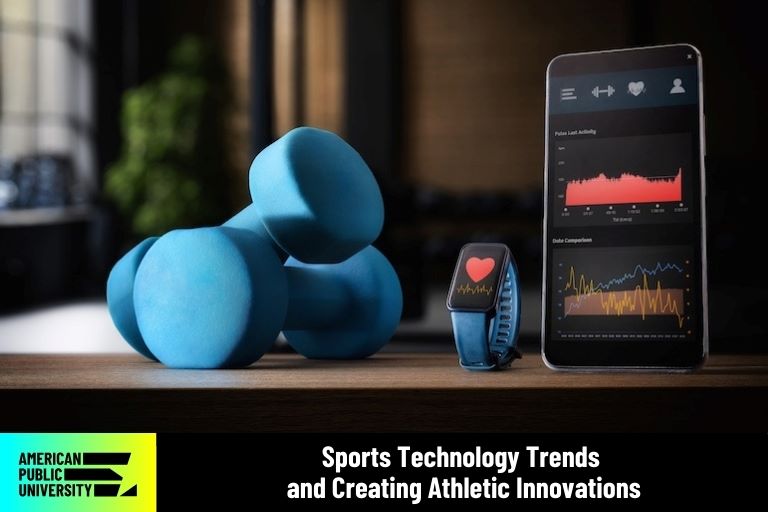
Today, the way that games are played and experienced has changed radically with the development of sophisticated sports technology. These technological tools are used by amateur and professional players and sports business leaders for everything from optimizing performance to reducing injuries, improving athlete development, and monetizing fan engagement.
Professional Sports Technology Trends
In the sports industry, competition is intense. Shaving mere seconds off a runner’s pace or pinpointing an opponent’s weakness can make all the difference.
Uncovering insights about athletic performance, however, is no longer exclusively the domain of coaches. Sports technology enables:
- Athletes to train more effectively
- Trainers to predict potential injuries
- Organizations to enrich fan experiences
Optimizing Athlete Performance
Data analytics and artificial intelligence now offer highly advanced approaches to swiftly assessing individual and team performance. Notable solutions include:
- Computer vision
- Data-driven talent scouting
- Artificial intelligence-driven coaching
- Communication helmets
Computer Vision to Provide a Competitive Edge
With most sports, action can happen in an instant. As a result, it’s easy to miss subtle movements that can affect the outcome of a game.
Computer vision uses algorithms for the tactical analysis of game footage, according to Annotation Box. These data points provide coaches with actionable insights to aid athletes in preparing for competition. Processing vast amounts of visual data in an instant allows for more accurate assessment of athletes to inform strategic decisions and training programs.
Annotation Box also notes that the U.S. Women’s National Soccer Team was among the first to embrace this technology in sports. With this technology, coaches can zoom in on a recording to find a particular play and gain data-driven insights not caught during live games. This feedback helps their athletes to prepare for future games.
In basketball, video analysis tools can reveal the best shooting locales. Baseball players also use motion detection and video analysis to gain in-depth insights and improve their game through real-time feedback.
Tools like Rapsodo® measure key performance indicators through radar detection and camera footage, analyzing everything from launch angles to pitch velocity. Similarly, HitTrax® provides virtual training as well as immediate feedback on any swing adjustments a player needs to make.
Data-Driven Talent Scouting
Just a decade ago, talent scouts recruited players based on watching college sports highlight reels and other conventional methods. Those days have changed.
In the early 2000s, the movie “Moneyball” showed how an underperforming team could excel using math-based approaches to uncover hidden talent. Data-driven talent scouting takes that concept a step further.
Talent scouts use this technology, which brings together robust analysis of a player’s performance metrics, physique, and other attributes. This type of analysis supports teams in reducing the risk of player acquisition decisions.
Data-driven talent scouting is one of the fastest growing segments of sports technology. The NHL is among the professional sports leagues using this technology to find the next up-and-coming players.
Artificial Intelligence-Driven Coaching
Artificial intelligence (AI) makes it possible to analyze player performance and adapt at a moment’s notice. AI systems also support game day decisions.
With this technology, organizations can crunch vast amounts of data about performance metrics and video footage to figure out crucial patterns. These patterns may reveal an opponent’s weakness or a potential new strategic approach.
Industry insiders say that coaches are still crucial, but sports tech enhances their capabilities. Through powerful data analytics, AI may identify trends that wouldn’t be apparent to the naked eye. In addition to assessing what has already occurred, AI can help make predictions about future interactions.
Referees are also relying on AI to make more informed calls. The International Gymnastics Federation now uses an AI-assisted judging system. By combining high-definition cameras with data analysis, they have a more impartial way of scoring gymnasts.
Communication Helmets
Technology has shaken up the sports industry, and one key example is in player-to-player and coach-to-player communication. Helmets with integrated headsets make it possible for players to talk with teammates throughout the game. In some games, coaches can even direct plays this way. NFL players hear calls directly in their helmets through encrypted communications.
This equipment is also being used in college sports. In 2024, the National Collegiate Athletic Association began allowing communication helmets during its regular season games, with some restrictions. For example, communication is halted at key times during games to prevent real-time modifications during the second half.
Supporting Injury Prevention
As awareness has increased about the dangers of concussions and other injuries, there’s more pressure on the industry to safeguard players. In addition to the ethical reasons for injury prevention, teams need to maximize performance for financial reasons.
For instance, studies found professional soccer teams anticipate that at least 12-14% of their teams will be unavailable due to injuries. These player gaps eat into any edge a team may have.
Sensor-Enabled Gear for Enhanced Performance Analysis
From mouth guards to helmets, player gear is often embedded with sensors to identify potential risk. Measuring the force in which a player was hit may help reduce the chances of injury. Helmets are also being engineered to absorb impacts more efficiently to further lower concussion rates.
Smart knee braces monitor pressure and strain to lower the chance of a player suffering an injury. Smart hydration systems also help ensure athletes consume the right amount of fluids to avoid fatigue and dehydration.
For players who have experienced an injury, wearable recovery technology allows for personalized recovery strategies. Tracking muscle activity, joint movements, and other relevant data helps with monitoring recovery efforts and making adjustments along the way.
Beyond these technologies, some sports organizations are employing drones on the field to detect and respond to injuries faster.
Data Analytics and Machine Learning
Machine learning (ML) is a process that computer systems employ to use real-time data to train themselves to make better decisions. This method can be beneficial for protecting players from injuries.
Professional players are often monitored via devices such as accelerometers and gyroscopes. These devices track everything from jump metrics to throwing mechanics.
Statistics from players’ devices can be combined with data about thousands of other athletes, making it possible to identify movement patterns that could lead to injury. By applying machine learning, coaches are able to use these insights to adjust the intensity of play as needed.
Engaging Sports Fans
Between the plethora of viewing options and fans’ short attention spans, it’s tougher for sports organizations to maintain viewership of live sporting events. Surveys show that younger fans often prefer watching highlights to seeing the full game. These trends have forced professionals sports leagues to build new models of fan engagement.
Leaders in the sports industry are tapping into the demands of rabid sports fans who crave a sense of connection with their favorite teams. Some sports teams are experimenting with the concept of virtual season tickets, featuring bonuses such as virtual watch parties and exclusive video content. Additional sports tech for fan engagement includes:
- More personalized sports entertainment
- Virtual reality experiences
- Avatars
- Virtual stadiums
More Personalized Sports Entertainment
Savvy sports leagues recognize they need to highly personalize fan experiences. Applying algorithms to sports broadcasts enables business owners to build highly targeted advertising into shorter segments.
Live voting, alternate commentary streams, and augmented reality overlays can dramatically enhance fan engagement. Event betting also builds excitement during sporting events.
Fantasy football is anticipated to be a tremendous growth market, according to Spherical Insights. This company predicts fantasy sports will be worth around $90 billion by 2032.
Virtual Reality Experiences
Fans are no longer passive viewers of games. They expect behind-the-scenes insights and true immersion in sports.
To that end, virtual reality (VR) headsets allow basketball fans to gain a view from mid-court or golf enthusiasts to watch top players from behind the tee box. VR makes it possible to relive a winning shot or game from a player’s perspective.
The technology industry is increasingly getting into the game. Apple®, for example, grabbed broadcasting rights for Major League Soccer and began delivering VR experiences with the National Basketball Association (NBA®). Meanwhile, Amazon® teamed up with FanDuel® to offer personalized bet tracking, rapid recaps, and key stat overlays within broadcasts.
Avatars
Avatars enhance the virtual experience, making it possible for sports fans to immerse themselves in games in new, interesting ways. Some players have 3D avatars to connect with fans online. Additionally, organizations like ESPN® are trying out avatars for sports broadcasts, sharing play-by-plays and top stats with loyal fans.
Virtual Stadiums
As virtual worlds like Minecraft® increased in popularity, the sports industry got on board. Sports organizations built virtual stadiums where fans come together online to cheer on their favorite teams.
This sports tech serves multiple purposes. It makes fans feel that they are a part of the game, and it offers ways to increase revenues. Sports teams make money on virtual stadiums through:
- Selling VIP experiences and digital merchandise to engage fans
- Offering naming and branding opportunities
The smart stadium market has already exceeded $19.46 billion, with estimates that it will reach $54.91 billion by 2034, according to the analyst firm Straits Research.
Sports Technology Trends for Everyday Athletes
Technological advancements aren’t reserved for professional athletes. Everyday sports enthusiasts are leveraging training data and detailed insights from technology products such as:
- Smart gear
- Game simulations
- Wearable technology
Smart Gear
Sports equipment is increasingly being designed with built-in intelligence. Adidas® manufactures balls that track kick force and trajectory, while Wilson® has motion detectors within basketballs to measure shot accuracy and distance. The real-time data is fed back into a mobile app, making it easy for amateur sports teams to analyze their plays and make continual improvements.
In other news, Nike®, Under Armour®, Digitsole®, and other manufacturers are launching smart shoes. This footwear offers features such as sensors that record a runner’s stride and cadence and offer personalized feedback to improve comfort and sports performance.
Game Simulations
Sports training has gone virtual with the advent of game simulations. This sports technology allows athletes to gain a realistic practice experience in a way that’s risk-free. By simulating the live environment, players are able to practice executing plays in a controlled way.
Incorporating generative AI takes virtual reality training one step further. AI can mimic opponents’ playing styles, enabling players to practice going face-to-face against the competition without risk of injury. They can use this experience to hone their techniques.
This approach to sports training helps players to optimize response times and mentally prepare for games by visualizing scenarios they may encounter. Gamification can improve player performance by strengthening reflexes and preparing to make decisions under pressure. Many simulators include built-in performance analysis for objective advice about gaining a competitive edge.
Wearable Tech
Wearable devices allow for the precise tracking of athletes’ movements, speed, and endurance to support personalized training and help prevent injuries. Using a smart watch or other wearable technology also provides a strong motivational tool. Amateur athletes can share workout results with others as friendly competition or use their own metrics to push themselves.
Watching trends in metrics such as heart rate exertion and recovery scores helps people to work out in a safer way. These data points make performance analysis within easier reach of amateur athletes.
Ethical Considerations in Sports Technology
Athletic performance is increasingly reliant on technology. While the sports industry benefits from these developments, there are also ethical issues to consider, such as:
- Ensuring fair play
- Prioritizing data privacy
- Transparency in data policies
Ensuring Fair Play
Teams with larger budgets for sports tech may gain an unfair competitive advantage over other teams. Sports organizations need to carefully establish rules that level the playing field for everyone involved. Promoting fair play requires equal access to technology, so that innate talent is not drowned out by technical innovations.
Prioritizing Data Privacy
Sports technology offers significant benefits for enhancing training strategies and lowering injury risks. However, when it comes to gathering vast amounts of real-time data, organizations need to think about how to secure that information. Whether collecting fan preferences or an athlete’s vital signs, the industry must find ways to ensure data privacy.
With organizations worldwide facing an unprecedented number of data breaches, the sports industry must employ stringent measures to safeguard the rapidly increasing amount of information it collects. Enacting safeguards will help sports teams to support the future growth of this advanced technology with confidence.
Additionally, decisions need to be made about just who owns all this data. For example, does the wearer of an Apple Watch® own the biometric data captured on it or does the company?
Transparency in Data Policies
With sports teams capturing an immense amount of information about their athletes, the question arises about just how this data can be used. Ideally, the information should be used for performance optimization and not to make business decisions that rely on private health information.
For instance, it would not be fair to use private information against a player in contract negotiations. That’s why sports teams need to be proactive in developing and sharing data use policies and gaining athletes’ consent before gathering such information.
Sports Tech Market Predictions and the Global Sports Industry
As new technology becomes more ubiquitous, sports industries around the world will count on it even more. This evolution leads to the inevitable question of the role that humans will have in future decision making. Likely, the most prudent move is to use sports tech to augment the expertise of coaches, recruiters, athletic directors, and other professionals.
When it comes to player safety, for instance, organizations can’t rely exclusively on algorithms. Similarly, a human touch is essential to coaching. Players benefit from direct interactions and authentic motivational conversations that only a person can provide.
This balanced approach of bringing together professionals with sports tech allows for the best of both worlds. Sports technology enhances a player’s competitive edge without taking the place of the people who are integral to running the organization.
Technology in sports is becoming increasingly commonplace, whether it’s in the professional arena or in everyday activities. According to Fortune Business Insights, the worldwide sports tech market share is now in excess of $26 billion and is expected to surge to $139.41 billion by 2032.
As individual athletes and teams improve their performance using sports tech, we’re likely to see future innovations in this field. The significant advancements on this front will continue to offer the amateur and professional athletes who embrace sports technology a real competitive edge.
The Bachelor of Science in Sports and Health Sciences at APU
For adult learners who are interested in sports-related topics such as exercise science, fitness, and nutrition, American Public University (APU) offers an online Bachelor of Science in Sports and Health Sciences. Taught by experienced instructors, the courses in this bachelor’s degree include human anatomy and physiology (with lab), sports psychology, and the foundations of nutrition. Other topics include kinesiology, exercise programming and testing, and exercise physiology.
For more details about this bachelor’s degree in sports and health sciences, visit APU’s nursing and health sciences degree program page.
Note: Material for lab courses will only be provided once. If you need replacement lab equipment for any reason or need to retake the course later, you will need to purchase your own lab refills.
Rapsodo is a registered trademark of Rapsodo Pte, Ltd.
HitTrax is a registered trademark of InMotion Systems, LLC.
Apple and Apple Watch are registered trademarks of Apple, Inc.
NBA is a registered trademark of NBA Properties, Inc.
Amazon is a registered trademark of Amazon Technologies, Inc.
FanDuel is a registered trademark of FanDuel Group, Inc.
ESPN is a registered trademark of ESPN, Inc.
Minecraft is a registered trademark of the Microsoft Corporation.
Adidas is a registered trademark of Adidas AG.
Wilson is a registered trademark of the Wilson Sporting Goods Company.
Nike is a registered trademark of Nike, Inc.
Under Armour is a registered trademark of Under Armour, Inc.
Digitsole is a registered trademark of Digitsole Pro.