By Dr. Brian Collins and Dr. Novadean Watson-Williams | 12/10/2025
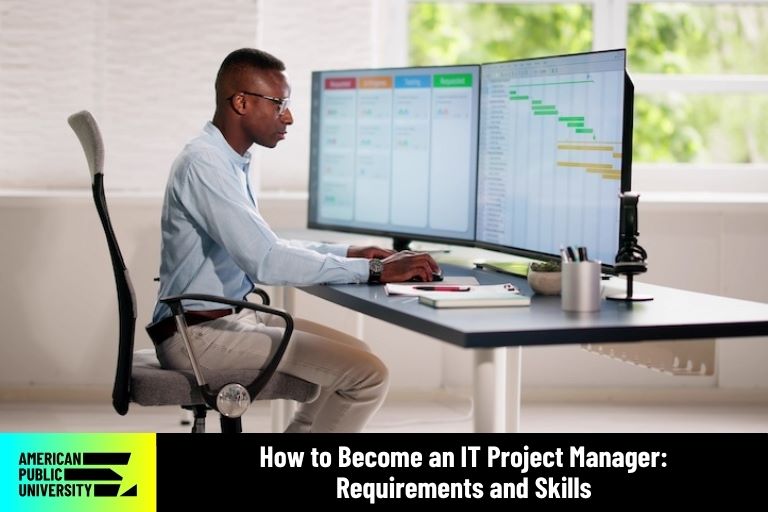
Information technology (IT) influences industries across the nation. People are engaging in various innovations and strategic technology efforts.
Accordingly, swift changes in technology and technology infrastructure are demanding keen insights, communication skills, and techniques. These qualities are needed to address concerns such as:
- Project planning
- Risk management
- Stakeholder management
- Change management
- Project success
With the urgency to solve problems and deliver realistic solutions, IT professionals require both hard and soft skills to be effective IT managers. Good project management remains the cornerstone for ensuring solid project management success.
What Does IT Project Managers' Work Involve?
From launching groundbreaking AI models that redefine entire industries to leading NASA collaborations that put technology into orbit, IT project managers are the essential leaders of technological innovation. In a world utterly dependent on code, data, and digital transformation, IT project managers are the critical link between brilliant ideas and real-world impact in today’s global economy.
At its core, an IT project manager is the central leader responsible for planning, executing, and delivering technology-focused projects that are:
- On time
- Within budget
- Adhering to the required scope
IT project managers are the ultimate owners of a project's success or failure. But what separates IT project management roles from general project management roles is the non-negotiable need for deep technical literacy.
An IT project manager must be comfortable – and credible – in conversations about:
- Software development life cycles
- Project documentation and project teams
- Microservices vs. monolithic architecture
- Cloud computing trade-offs
- The intricacies of an artificial intelligence/machine learning (AI/ML) program’s execution
You don’t have to be the best coder in the room. However, you absolutely must be able to speak the language fluently to lead project team members and help develop project plans. You must also guide technical decisions (including risk management) and earn the respect of your project team members.
The Daily Lives of IT Project Managers
A day in the life of an IT project manager role is dynamic, challenging, and constantly change. Typical tasks extend far beyond Gantt charts and status updates. For instance, IT project managers must:
- Translate vision into action – A significant part of the job involves communicating project progress and strategic value to C-suite leadership and key stakeholders. IT project managers must articulate why a delay in a database migration could impact quarterly revenue goals or how a new feature aligns with a company’s five-year vision.
- Monitor the progress of other employees – IT project managers collaborate daily with cross-functional teams of data scientists, ML engineers, user experience (UX) designers, and other program managers. Each group has its own priorities and communication style. An IT project manager act as the central hub, fostering collaboration and ensuring everyone is pulling in the same direction.
- Make strategic decisions – When a critical vendor misses a deadline or an unexpected bug surfaces in software, all eyes turn to the IT project manager. The IT project manager has to make the tough calls – reprioritizing the backlog, reallocating resources, or communicating a change in the timeline to leadership. At the same time, an IT project must stay aligned with the ultimate business goals.
- Manager partners and budgets – IT project managers are often in charge of managing vendor relationships and overseeing technology selection. This type of project management work requires a sharp eye for detail, ensuring that contracts are sound, performance meets expectations, and costs are meticulously managed to prevent budget overruns.
Hard and Soft Skills Every IT Project Manager Needs
An IT project manager not only needs project management experience, but also need a balanced, powerful mix of hard skills and soft skills to work effectively. This combination of hard and soft skills is essential for managing projects.
Also, an IT project manager must possess a sensitivity to both technical and social needs, which are often influenced by the stakeholders and controlled environments associated with the nature of different projects.
Hard Skills
- Project management methodologies – IT project managers need a deep, practical understanding of frameworks like Agile, Scrum, Kanban, and Waterfall. It’s not enough to know the definitions; it’s also necessary to know when to apply each one. Certifications like the Certified Scrum Master (CSM®) and Certified Scrum Product Owner (CSPO®) are excellent for demonstrating this expertise.
- Technical acumen – Credibility is everything for project managers. IT project managers should under means understanding core concepts like data engineering pipelines, machine learning operations, and cloud infrastructure (Amazon Web Services®, Azure®, and Google Cloud® Developer). They should also comprehend application programming interface (API) integration, and the software development life cycle (SDLC). This knowledge is useful for facilitating meaningful architectural discussions and spotting potential risks before they become major problems.
- Software and tools – Proficiency in modern project management software is a must for IT project managers. Tools like Jira®, Confluence®, Asana®, and Microsoft Project® are staples for managing backlogs, facilitating release planning, tracking progress, and creating a single source of truth for your entire team.
- Budgeting and profit/loss (P/L) management – Top-tier IT project managers are business-savvy. They can create, manage, and defend a project’s budget. Also, they understand how their project’s finances align with the department’s and the company’s broader profit and loss (P/L) goals.
Soft Skills
- Executive communication – IT project managers are master translators, capable of converting complex technical details into clear, concise business value for leadership.
- Leadership and mentorship – The best IT project managers are servant leaders, not dictators. They excel at hiring, training, and scaling teams to meet aggressive goals. They remove obstacles for their team, prevent distractions, and foster a culture of psychological safety and high performance.
- Problem solving – When things go wrong – and they will – project managers must be the calm in the storm. They are adept at analyzing data to identify the root cause of a problem, creating data-driven initiatives to fix it, and developing creative solutions to keep projects moving forward.
- Stakeholder influence – A key part of the IT project manager’s job is aligning different departments – from engineering and data science to product, marketing, and legal – toward a common objective. This work requires empathy and negotiation, as well as the ability to build consensus even when priorities conflict.
Useful Project Management Certifications for Entry-Level IT Project Managers
Project management certifications and IT certifications are crucial for proving to hiring managers that you possess a standardized, industry-recognized level of knowledge. Some of the most valuable certification options include:
- Certified Associate in Project Management (CAPM®) – The CAPM certification is an excellent entry-level certification from the Project Management Institute (PMI®) for people who are new to the project management field.
- Project Management Professional (PMP®) – The PMP certification is the global gold standard for experienced project managers. Obtaining this certification shows deep commitment and comprehensive knowledge.
- Certified Scrum Master (CSM) – This certification is essential for demonstrating expertise in Agile environments, which are now the norm for developing software.
- Certified Business Analysis Professional (CBAP®) – This certification from the International Institute of Business Analysis highlights skills in requirements gathering and stakeholder management, which are a critical part of defining any IT project’s scope.
- CompTIA Certifications – The Computing Technology Industry Association offers various certifications in different areas of information technology. These certifications are respected by many employers.
How to Gain Experience for Project Management and IT Jobs
In the information technology field, theoretical knowledge isn’t enough; you need hands-on practice and technical skills. Dedicate time to self-study and practical application.
Very few people in project management start their career path with “IT Project Manager” on their business card. A common and effective path is to begin in a related IT position – such as a business analyst, software developer, project coordinator, or quality assurance tester – and proactively take on project coordination tasks. Volunteer to take meeting notes, create a simple tracker for a small feature, or ask to shadow current project managers to understand their project management experience.
Networking
Build professional connections in the IT project management industry by joining organizations like the Scrum Alliance or the IIBA. Attend local meetups and virtual conferences to broaden your network and hear about upcoming job opportunities.
Becoming a successful IT project manager demands a blend of formal education, relentless curiosity, hands-on experience, and a strong professional network. This career path is undoubtedly challenging. But for IT professionals who are passionate about technology and leadership, it offers an unparalleled opportunity to stand at the forefront of innovation, turning ambitious ideas into tangible realities that shape our world.
The Bachelor of Science in Information Technology Management at APU
For adult learners interested in pursuing an IT project management career path, American Public University (APU) offers an online Bachelor of Science in Information Technology Management. The courses taught for this degree program include topics such as database concepts, management information systems, and networking concepts. Other courses include IT security/risk management, IT project management, and human relations.
This bachelor’s degree also features three concentrations:
- Cybersecurity Management
- General
- Negotiation
For more details about this bachelor’s degree, visit APU’s information technology degree program page.
Note: Completion of this program does not award any professional certifications, but may be helpful in preparing to earn such certifications. Some program courses meet topic requirements for CompTIA Project+® certification, Microsoft Word® certification, the Internet Business Foundations curriculum of the Certified Internet Web (CIW®) Foundations certification, and the CIW Ecommerce Specialist certification.
Certified Scrum Master and Certified Scrum Product Owner are registered trademarks of the Scrum Alliance, Inc.
Amazon Web Services is a registered trademark of Amazon Technologies, Inc.
Azure is a registered trademark of the Microsoft Corporation.
Google Cloud Developer is a registered trademark of Google, LLC.
Jira is a registered trademark of Atlassian Pty., Ltd.
Confluence is a registered trademark of Atlassian Pty., Ltd.
Asana is a registered trademark of Asana, Inc.
Microsoft Project and Microsoft Word are registered trademarks of the Microsoft Corporation.
Certified Associate in Project Management, PMI, and Project Management Professional are registered trademarks of the Project Management Institute, Inc.
Certified Business Analysis Professional is a registered trademark of the International Institute of Business Analysis.
CompTIA Project+® is a registered trademark of the Computing Technology Industry Association.
Certified Internet Web is a registered trademark of Certification Partners, LLC.
Dr. Brian Collins is an adjunct professor for the School of Science, Technology, Engineering, and Math at American Public University. He holds a bachelor’s degree in liberal arts from Penn State University, a master’s computer software engineering from West Virginia University, a master’s degree in business administration from the University of Phoenix, and a doctoral degree in business management from Argosy University.
Dr. Collins is the Director of AI Programs at the International Data Corporation (IDC). He has over 15 years of experience leading AI/ML teams at world-class organizations like Amazon, where he contributed to the Nova LLM and the "Alexa in Space" NASA project.
Dr. Novadean Watson-Williams has over 20 years of experience in the information technology field. Dr. Watson-Williams holds an A.A. in computer studies and a B.S. in information systems management from the University of Maryland University College, a B.S. in social science education from the University of South Florida, an M.A. in general counseling from Louisiana Tech University, and a D.B.A. in information systems from Argosy University.
Previously, she published several blog articles on topics such as “Countering Cybersecurity Attacks through Accountability,” “Creating a Personal Brand through Using the Internet,” “Leadership Using Effective Nonverbal Communication,” and “Inspiring Self-Improvement through Technology Education, Collective Intelligence and Soft Skills.” She has also co-published several other articles, including “RFID with Real Implications,” “Artificial Intelligence in Information Security,” and “The Evolution of Information Security.” Dr. Watson-Willams has also published two additional articles: “Shifting Gears in Leadership from Defensive Driving to Strategic Leadership” in The Air Force Journal of Military Conflict Transformation (JMCT) 2023 Edition and "The Power Within: Understanding the Art of Influencing and Associated Skills” in The Air Force Journal of Military Conflict Transformation (JMCT) 2024 Edition.