By Chris Hooper | 08/31/2026
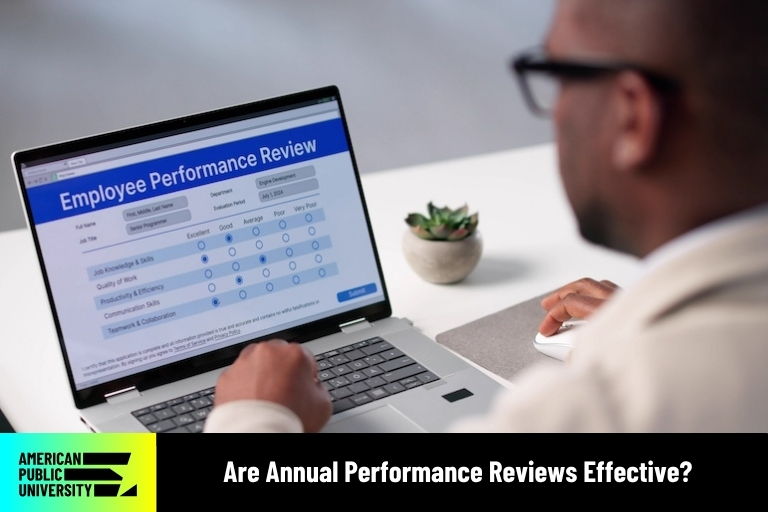
Performance reviews can be very effective for an organization. However, it is important to use them properly.
An annual performance review (also known as a performance evaluation) is critical to good workplace management. The Society of Human Resource Management® (SHRM®) states, “It’s about creating a system where employees consistently deliver against business objectives. Organizations with effective performance practices see higher productivity, lower turnover, and stronger financial results.”
What Is an Annual Performance Review?
On a regular basis (at least once a year), most workers undergo a performance review. This review is a formal, permanent record often tied to merit-based raises and promotions.
The performance review involves a self-assessment of the employee’s performance at work over the past year, including past achievements and how those achievements aided the company. Skills and competencies are also assessed using objective criteria that employees understand.
After the employee completes the performance review, a manager reviews it. The manager then has a meeting with that worker to discuss potential areas of improvement and set goals to be reached in the next year.
For employees, however, the yearly performance review is often dreaded and accompanied by feelings of high anxiety and stress. It can also be limited by recency bias and high time costs.
The performance review process has a proven track record of success in the private and public sectors, as well as government agencies. When performance reviews are utilized effectively, they can:
- Improve employee retention
- Increase accountability
- Provide better alignment with an organization’s strategic goals and objectives
According to Gallup®, “74% of employees receive a performance review once a year or less often,” and this lack of a performance review can slow professional growth and hurt business goals. Gallup also notes that only 14% of employees “strongly agree that their performance reviews inspire them to improve.”
Who Is Involved in the Performance Review Process?
It’s important to note, however, that an employee’s performance review and any workplace feedback is not the sole responsibility of the employee’s supervisor. Other business leaders who play a pivotal role in performance management include:
- Senior leaders
- The company president
- Human resources (HR) staff
- The employee
How Senior Leaders Support Performance Reviews
An organization’s senior leadership is responsible for establishing and overseeing the strategic goals, vision, and direction for the organization.
Typically, a senior leader is responsible for the oversight of the organization and plays a lesser role in the day-to-day execution of their organization’s performance management. But without strong leadership, a clear vision, and strategic objectives for the company, a performance management program is less effective. Employees need to know how their work contributes to the bigger picture.
If applicable, a senior leader is accountable to the board of directors and stockholders. That leader ensures organizational success in several key areas, including:
- Employee engagement
- Morale and production
- Succession planning
- Retention
- Resource management
- Accountability for employees and supervisors
How Company Presidents Support Performance Reviews
A company’s president focuses on internal matters. For instance, the president oversees day-to-day operations, workforce management, and the company’s strategic goals.
Part of this work involves the effective implementation of performance management. The president is also responsible for overseeing the organization’s human resources department.
How Human Resources Supports Performance Reviews
The human resources department of any organization is responsible for everything from employee hiring to retirement. HR staff oversees the training programs, enforces disciplinary actions, and manages performance. HR staff play a critical role in performance management and serve as the strategic backbone of the performance review process.
HR is responsible for all facets of the company's performance review process. They should ensure that the performance review is fair, objective, and consistent and is strategically aligned with company goals. This work includes designing, implementing, and managing a performance review process that will:
- Highlight employee strengths
- Celebrate employee accomplishments
- Provide specific, actionable, and constructive feedback
- Offer advice for areas of improvement
- Align with the employee’s duties and responsibilities
- Outline training and professional growth opportunities
Indeed® for Employers notes that “An effective performance management program makes it easier to assess your current workforce and plan for future employment needs.” However, an HR team should also:
- Check performance reviews to ensure they comply with an employee’s position description and company policy as well as addressing performance, not disciplinary matters.
- Establish a uniform framework for conducting performance reviews
- Ensure the performance reviews align with and directly support a director’s organizational and strategic goals.
- Launch and monitor the progress of the performance reviews for the organization
- Serve as subject matter experts with supervisors on when a performance improvement plan (PIP) is warranted and what guardrails are needed when a PIP is issued for an employee
HR should also use a calibration process, which provides a consistent expectation for everyone involved in the performance review. Calibration creates shared expectations in which high performers are identified and rewarded, while low-performing employees are accurately identified and properly managed to improve their performance.
In addition, HR should ensure all supervisors and managers are properly trained and fully understand the company’s performance review process. This training will help to mitigate any biases and aid supervisors with objectively reviewing employee performance.
Furthermore, HR can use data analytics to capture, manage and analyze data from various sources when providing a director and president with strategic decisions involving the workforce, such as:
- Workforce planning
- Succession planning
- Hiring
- Downsizing
- Promotions
Performance reviews provide qualitative and quantitative metrics. This type of data offers critical information when senior leadership makes decisions that will have a lasting impact on the entire company.
How Supervisors Conduct Effective Performance Reviews
A supervisor has the most important role in the performance review of an employee. When a performance review is used effectively, the employee’s work performance is recognized and celebrated.
Additionally, the performance review is an opportunity to provide each employee with feedback on how to improve work performance. The supervisor is responsible for setting performance expectations and ensuring employees meet those goals.
For instance, a performance review enables a supervisor to discuss the employee’s past performance but also establish short- and long-term development goals. A supervisor who demonstrates a commitment to each employee’s professional growth can improve employee performance, morale, well-being, retention, and strategic performance.
It is equally helpful to regularly meet with each employee to provide regular, continuous, and constructive feedback, rather than once a year. Informal meetings and constant feedback throughout the year will benefit your relationship with employees and their performance. It will also reduce the employee’s stress, and the results will be more positive and productive.
Effective and continual communication is the most important responsibility of the supervisor. Use this opportunity to listen to your employees and how the performance review can be an opportunity to help them, serve as their mentor, keep them motivated, and aid their professional development.
However, some employees will be more challenging to manage and may not always be receptive to workplace feedback from a supervisor. The performance review is where any performance issues should be documented.
But an employee should first hear from a supervisor about any work problems, so that employees have the chance to alter their work deficiencies prior to a performance review. When these employee situations occur, HR is your best friend and should be consulted early and often.
And supervisors, don’t forget: Your boss is required to review and evaluate your performance, too.
How Employees Benefit from Performance Reviews
For employees, a performance review has various effects. It will:
- Impact their performance
- Shape their trajectory within the company
- Play a critical role in their morale, well-being, and retention
No one knows better than employees on how well they have performed. In a performance review, an employee can reflect back on the performance period and discuss:
- Their accomplishments and achievements
- Their trainings and certifications they’ve completed
- The skills they’ve improved
- Their overall impact on the organization
But to self-evaluate their performance, the employee needs to be open, honest, and objective. Areas of satisfactory performance and areas of improvement will need to be clearly identified in the performance review and during the discussion with the supervisor.
The performance review process should encourage a culture of continuous feedback with the supervisor. A supervisor should encourage regular check-ins beyond the annual performance review, rather than relying on the performance review as the lone opportunity for delivering feedback.
Employees value performance reviews that are genuine conversations. The best performance reviews enable employees to share their perspectives, ask questions, and actively participate in setting goals and developing action plans. In some organizations, these discussions can include potential career paths, training opportunities, and new roles that can help the employee advance within the organization.
An employee should see the performance review as a chance to understand their strengths and weaknesses and identify areas for professional development. When used properly, it is a useful tool for improving employee performance.
Also, the performance review offers a structured opportunity for the employee to ensure alignment with their manager regarding job responsibilities and goals, as well as how their individual contributions support the organization’s success, strategic goals, and objectives.
Organizations are only as strong as their weakest links. For performance reviews to be successful, everyone involved in the process should understand the responsibilities and fully support the roles of everyone else.
With a clear strategic vision and a process supported by training, coaching, and oversight, your performance review process will be an invaluable tool for your organization.
The Bachelor of Arts in Management at APU
For adult learners who want to upskill for future professional growth and improve their management knowledge, American Public University (APU) provides an online Bachelor of Arts in Management. In this degree program, students can study topics such as principles and theory of management, organizational behavior, and management ethics. Other courses include management communications, employment and labor relations, and strategic management.
This bachelor’s degree in management has eight concentrations to allow students to tailor their courses to meet their professional goals. Students interested in performance management may want to pursue a concentration such as entrepreneurship, leadership, or talent acquisition and retention.
This bachelor’s degree has also earned specialty accreditation from the Accreditation Council for Business Schools and Programs (ACBSP). This accreditation shows that this program has been examined for high academic standards by education professionals.
For more details, visit APU’s business and management degree program page.
Society for Human Resource Management® (SHRM®) are registered trademarks of Society for Human Resource Management.
Gallup® is a registered trademark of Gallup, Inc.
Indeed® is a registered trademark of Indeed, Inc.
Chris Hooper has been an adjunct professor with American Public University since 2011. He teaches human resource and business courses for the Dr. Wallace E. Boston School of Business at APU. Chris holds a bachelor’s degree in organizational leadership from Southern Nazarene University and an MBA from Webster University.
Additionally, Chris is retired military, having served for over 23 years in the U.S. Coast Guard. Chris has also been a federal leader for 14 years for federal agencies, including the U.S. Office of Personnel Management and Federal Executive Boards.