By Dr. Matthew Loux and Bryce Loux | 09/29/2026
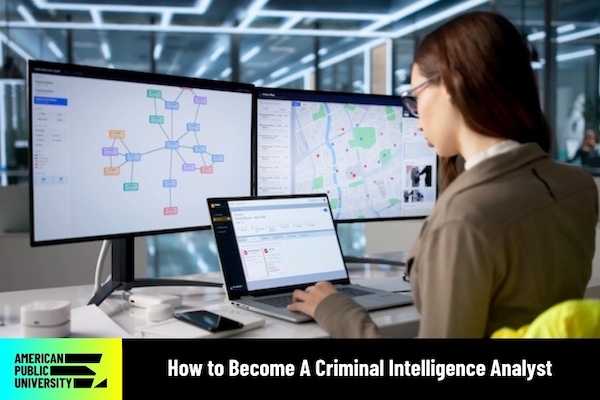
The role of a criminal intelligence analyst is becoming increasingly essential in law enforcement. These analysts serve an important function that is not typically seen among the positions that serve on the front lines.
While police officers respond to calls and investigate crimes, intelligence analysts examine data to find and forecast trends in criminal activity. They provide intelligence crucial to the decision-making process. Their contribution to law enforcement also helps disrupt organized crime, terrorism, and other threats to public safety.
Criminal organizations are not only using modern technology to coordinate criminal activity, but also to hide it. Law enforcement officers and criminal intelligence analysts must keep up with these additional challenges.
For example, encrypted communications, social media, advanced cyber tools, and cryptocurrency are being used to thwart the detection of criminal operations. Intelligence analysts rely heavily on their technological and research skills to see the connections that no one else can.
If you are not interested in becoming a police officer, but enjoy research and problem-solving while serving the community, then working as a criminal intelligence analyst could be a fulfilling career path for you.
What Is A Criminal Intelligence Analyst?
Criminal intelligence analysts evaluate information pertaining to criminal activity to develop criminal intelligence. Their main purpose is to process large volumes of raw information and analyze it to support investigations and create strategic and preventive measures regarding crime.
Unlike detectives, who investigate crimes after they are committed, intelligence analysts identify patterns, threats, and crime-related trends that may indicate emerging criminal activity. The work of intelligence analysts enables law enforcement agencies to anticipate potential threats and take preventive action.
Analysts may focus on more than one area of investigation, depending on the needs of an agency. Criminal intelligence analysts may also specialize in certain areas, such as:
- Gangs
- Drug trafficking organizations (DTOs)
- Human trafficking
- Financial crimes
- Terrorism and counterterrorism
- Cybercrime
- Organized crime
- Homeland security
- Public corruption
- Violent crime
- Open-source intelligence (OSINT)
- Financial intelligence (FININT)
Criminal Intelligence Analysis Is A Technology-Based Field
Technology is playing an ever-increasing role in criminal investigation and criminal intelligence analysis. For instance, today’s analysts need to be familiar with artificial intelligence (AI) that can detect outliers, perform pattern recognition, and complete tasks through record automation.
In addition, analysts use predictive analytics and crime models to identify patterns, trends, geographic areas, or activities that may warrant further analysis. Similarly, geographic information systems (GIS) enable analysts to visualize the relationships between criminal activity and a particular area.
Analysts also need to use social media intelligence because publicly available social media can provide investigative leads. However, analysts must remain aware of applicable legal requirements and ethical principles when collecting and using this information.
Interactive intelligence dashboards can help analysts organize complex information and communicate key findings to command staff.
The importance of technology in analysis cannot be overstated. However, even with the aid of technology, human judgment will always remain critical because information context, credibility, and legal considerations must be taken into account.
Key Responsibilities of A Criminal Intelligence Analyst
The work of criminal intelligence analysts falls into two main areas:
- Information gathering
- Criminal behavior analysis
Information Gathering
Criminal intelligence analysts gather information by collecting data from a variety of sources. These data sources may include police reports, arrest records, court records, and public databases. Other sources of information include surveillance reports, financial records, and cell phone records. Additional data sources include intelligence bulletins, interviews, informants, and geographic information systems.
Criminal Behavior Analysis
A criminal intelligence analyst studies criminal behavior and behavior patterns. Analysts use these behavioral patterns to identify various threats, detect crime trends, find criminal networks and analyze crime hotspots.
They can also conduct a financial analysis, learn about criminals’ communication patterns and the hierarchy of criminal organizations, and create intelligence products. Common intelligence products include intelligence bulletins, threat assessment reports, crime trend reports and strategic intelligence reports. Other intelligence products are tactical analysis and intelligence reports, link analyses, crime timelines, crime maps, and briefing presentations.
By the nature of their role, criminal intelligence analysts support investigators with the identification of criminal suspects, the interrelationship of criminal acts, and the identification of previously overlooked connections. Analysts’ work also aids the ranking of investigative leads, offers analytical support during large-scale investigations, and the preparation of command-level briefings.
Intelligence analysts are often required to prepare and present briefings for high-ranking decision makers such as police chiefs, command staff, detectives and prosecutors. They may also present briefings to federal agents, Department of Homeland Security personnel, and emergency management leaders.
Where Do Criminal Intelligence Analysts Work?
Criminal intelligence analysts can be found in various organizations. These organizations include local/state law enforcement agencies and sheriffs’ offices. These analysts may also work for federal agencies such as the Federal Bureau of Investigation® (FBI), the Drug Enforcement Administration® (DEA®), the Bureau of Alcohol, Tobacco, Firearms, and Explosives (ATF), and many other agencies.
Criminal intelligence analysts also work with fusion centers to share intelligence. They can also work for private-sector organizations that analyze complex organized crime, fraud, and security threats.
Becoming A Criminal Intelligence Analyst
Becoming a criminal intelligence analyst requires years of effort. It is necessary to fulfill certain requirements, such as:
- Earning a degree
- Learning essential skills
- Obtaining professional certifications
- Gaining practical experience
Earning A Degree
Educational requirements vary by employer, state, and role, but many criminal intelligence analyst positions require or prefer a bachelor’s degree in criminal justice or a related field. Other common degrees include intelligence studies, homeland security, cybersecurity, and political science. Additional useful fields of study include psychology, sociology, computer science and information technology.
Criminal justice degrees can provide a strong foundation, but a strong technical and analytical background is also valuable.
A master’s degree may also be beneficial for some supervisory, specialized, or federal positions, depending on the employer and employment requirements.
Learning Essential Skills
Criminal intelligence analysts require a unique set of highly developed technical and interpersonal skills, such as:
- Analytical thinking – Analysts must be comfortable analyzing data, working with large amounts of information, and recognizing meaningful patterns and correlations.
- Critical thinking – Information can come from many sources, and not all of those sources are credible. Analysts must continuously evaluate the reliability of sources and information, distinguishing fact from assumption and drawing well-supported conclusions from available evidence.
- Research skills – Strong research skills include knowing how to locate and obtain information from public records, databases, and other authorized resources. Analysts are experts in research techniques and the use of open-source intelligence and other forms of intelligence.
- Communication skills – Because intelligence products can affect the outcomes of operational decisions, excellent writing skills are essential. Analysts also need to deliver clear oral briefings.
- Attention to detail – Important investigative leads can emerge from minor inconsistencies.
- Ethics – Criminal intelligence analysts typically handle sensitive and confidential information.
Criminal intelligence analysts also require a good knowledge of technology. Depending on their role and agency, analysts may work with technologies such as Microsoft® Excel®, structured query language (SQL) databases, geographic information systems, and link analysis software. In addition, these analysts may also work with crime analysis software, intelligence databases, visualization software, Microsoft Access®, statistical analysis software, and basic programming languages, especially Python® or SQL.
Obtaining Professional Certifications
Professional certifications can demonstrate specialized knowledge and a commitment to continued development in the field. Examples of professional certifications include crime and intelligence analysis, geographic information system (GIS), and open-source intelligence (OSINT). Other certifications include financial crime investigation, anti-money laundering and cyber threat intelligence.
Because criminal methods and technologies continue to evolve, analysts may need ongoing education, specialized training, and professional development to maintain their skills.
Additional/different education and/or specific work experience for a specified amount of time may be required to be eligible for certifications. It is important to check educational and work experience requirements needed to be eligible for certifications.
Gaining Practical Experience
Employers often seek candidates with investigative or analytical experience, although analysts may also develop specialized skills through internships, agency training, and on-the-job training. Students and career changers can strengthen their experience by completing law enforcement internships, working as crime analysts, and participating in research.
Other ways to gain experience include building familiarity with GIS, strengthening Excel and database software skills, and practicing OSINT research. Additionally, aspiring analysts can volunteering with public safety organizations, attend intelligence conferences, and develop technical writing skills.
Potential Career Opportunities for Criminal Intelligence Analysts
With experience, criminal intelligence analysts may advance into a variety of specialized, supervisory, and leadership roles for federal law enforcement agents and other employers. However, requirements will vary depending upon the specific role, and a federal job will often require a security clearance.
Criminal intelligence analysts may also pursue employment in the private sector. Private-sector jobs include roles with financial institutions, cybersecurity organizations, and other employers that rely on intelligence analysis and risk assessment.
Building A Career Path in Criminal Intelligence Analysis
As criminal organizations adopt new technologies and methods, intelligence analysts must continue developing their own technical and analytical abilities to keep pace with evolving threats.
Success in this field calls for several characteristics, including an eagerness to learn, analytical thinking, and good communication and technical skills, as well as sound judgment and a strong sense of integrity. Analysts need to deal with constant changes in technology and methods used to commit crimes, as well as the challenges presented by different types of data.
People who enjoy solving complex problems, detecting patterns, and helping the community stay safe can make a meaningful social impact and build a satisfying career as a criminal intelligence analyst. Whether they work in government or the private sector, criminal intelligence analysts can play an important role in helping law enforcement agencies better understand criminal activities and respond to threats to public safety.
The Bachelor of Science in Criminal Justice at APU
For adult learners interested in both technology and criminal justice, American Public University part of American Public University System (“APU”) provides an online Bachelor of Science in Criminal Justice. In this degree program, students can take courses in criminal analysis, criminal profiling, and criminology. Other courses include criminalistics, constitutional law, and criminal law.
This B.S. in criminal justice also has a digital forensics concentration. Students can take courses in different subjects such as cybercrime, wireless networks, computer forensics, and various aspects of digital forensics.
The Bachelor of Science in Criminal Justice at American Public University part of American Public University System is not designed to meet the educational requirements for professional licensure or certification in any country, state, province, or other jurisdiction. This program has not been approved by any state professional licensing body and does not lead to any state-issued professional licensure. For further information on professional licensing requirements, please contact the appropriate board or agency.
For more information, visit APU’s security and global studies degree program page.
Federal Bureau of Investigation® is a registered trademark of Federal Bureau of Investigation.
Drug Enforcement Administration® and DEA® are registered trademarks of Drug Enforcement Administration.
Microsoft®, Excel® and Microsoft Access® are registered trademarks of Microsoft Corporation.
Python® is a registered trademark of Python Software Foundation.
Dr. Matthew Loux is a criminal justice faculty member for the School of Security and Global Studies at American Public University part of American Public University System. He holds a bachelor’s degree in criminal justice and a master’s degree in criminal justice administration from the University of Central Missouri State, a doctoral degree in management from Colorado Technical University, and a Ph.D. in educational leadership and administration from Aspen University.
Dr. Loux has been in law enforcement for more than 30 years. He has a background in fraud and criminal investigation, as well as hospital, school, and network security. Dr. Loux has researched and studied law enforcement and security best practices for the past 10 years.
Bryce Loux is an alumnus of American Public University. He holds a bachelor’s degree in fire science with a minor in criminal justice. Bryce is currently a student success coach.