Why Should You Enroll in an Arts and Humanities Program?
Unlike other academic disciplines, arts and humanities programs are focused on analyzing human culture and the human experience. Taking classes in ancient and classical, American, or military history, for example, enables a student to make sense of and learn important lessons from past historical events. History courses also provide a way to resist duplicating the same logistical and behavioral mistakes of past leaders in the military and in politics.
Similarly, literature classes typically offered as a part of an Arts and Humanities education encourage not only the study of different aspects of world literature but also allow learners to gain more insight into cultural traditions, human beings from different geographical areas, and writers' unique viewpoints. Through intellectual analysis, literature courses also promote a deeper understanding of humanity and life.
Seeking a major in areas such as philosophy or religion provides students with the opportunity to explore, analyze, and debate various topics according to their own personal interests. Enrolling in this type of program provides students with a solid knowledgebase that can be used in the future.

Why Is Online Education Helpful?
As a college student, taking arts and humanities courses at an online university offers several benefits. The asynchronous format permits our University students to set their own schedules without a time-consuming trip to a physical campus, so that students may study at whatever time they find suitable – morning, afternoon, or evening.
Some programs require in-person activity, including doctoral residencies, internships, practicums, proctored comprehensive exams, or class projects with in-person assignments. View your program of interest for specific requirements.
The online library at the University also allows research to be easily conducted from any location with an internet connection. In addition, our online learning environment utilizes a multimedia format. Many of our classes use ebooks that can be easily accessed 24/7 in our online library (note: some graduate courses require students to acquire their own books).
Information is also presented via other formats, such as videos and podcasts. This multimedia method of instruction enables adult learners with different learning styles to better absorb vital information about a variety of academic subjects.
What Workplace Skills Can Be Acquired from an Arts and Humanities Program?
Two of the most desired skills in today's workplace are oral and written communication. Communicating orally involves making speeches, podcasts, webinars, and in-person presentations for teaching information to customers, other employees, and C-suite executives.
Today's communicators must know how to craft information on various subjects that suits a particular audience, and the communication courses provided in our arts and humanities programs help students to more easily refine that skill in the online classroom.
Similarly, written communication is also a useful skill to possess. For example, today's arts and humanities graduates are required to create a host of written documents typically used for both internal and external business communication, including:
- Emails
- White papers
- PowerPoint or Prezi presentations
- Handbooks
- Press release for public relations efforts
- Reports
- Social media posts
- Meeting notes
- Blog, newspaper, or magazine articles
These business documents often require creativity and research, which can be developed and improved in the online learning environment.
In addition, writing-based professions typically require a deep understanding of technical writing, science-based writing, or business writing. As a result of the development of social media platforms and digital marketing, today's writers must also have a deep familiarity with not only the basic mechanics of writing such as grammar, spelling, and punctuation, but should also comprehend how writing can be tailored to attract the notice of search engines.
Students enrolled in an arts and humanities program often participate in group projects as a part of the curriculum assigned by an associate professor or another department teacher. Through these projects assigned by teachers at the University, a student can practice and develop soft skills such as empathy, critical thinking, complex problem solving, teamwork, creative thinking, and leadership, as well as an innovation-based mindset.

The Need for Foreign Language Skills
The convenience of ecommerce has made it possible for many organizations to embrace diversity and conduct business with customers and partners in countries around the world. As a result, there is a need for workers who can converse, write, and read documents in non-English languages.
Within the Arts and Humanities programs in our school, we offer courses for learning multiple languages, such as:
- Spanish
- German
- Russian
- French
- Portuguese
- Arabic
Familiarity with another language and its nuances as well as that country's business culture, history, and traditions can be helpful information for anyone who seeks opportunities in global businesses or nonprofits both inside and outside the United Status.
Career Opportunities for Arts and Humanities Graduates
Seeking a major in the arts and humanities can help prepare a learner for various career options, according to their professional interests. The Bureau of Labor Statistics notes that arts and humanities majors are often employed in professions such as:
- Art and graphic design
- Communication and public relations
- Education
- Management
However, the skills that a learner at our school acquires by taking an arts and humanities degree or certificate program are not limited to just these fields; the information gained from an arts and humanities education can be applied to multiple industry fields. For instance, someone with an entrepreneurial spirit may find that developing the ability to clearly communicate verbally or in writing with employers, vendors, partners, and management proves useful.
Bureau of Labor Statistics, U.S. Department of Labor, Occupational Outlook Handbook, [Field of Degree: Liberal Arts, accessed January 2023]
BLS salary data represents national, averaged earnings for the occupations listed and includes workers at all levels of education and experience. This data does not represent starting salaries. Employment conditions in your area may vary.
Arts and Humanities Student Organizations
In addition to picking up useful skills in the online classroom, the University provides networking opportunities through clubs and honor societies. The University offers multiple student organizations for any student, staff, alumni, or faculty member interested in the arts and humanities, including:
- Historical Studies Honor Society – promoting the study of history
- Lambda Pi Eta Club Honor Society – recognizing achievement in communication studies
- Paranormal Activities Club – promoting the investigation of paranormal phenomena
- Performing Arts Enthusiasts and Practitioners – engaging fine arts enthusiasts, including artists, music lovers, theater performers, and dancers
- Photography Club – promoting the study of photography
- Psychology Club – engaging members who are studying psychology
- R.E.A.D. Book Club – advancing members' recognition of great books
- Saber and Scroll Historical Society – advancing the knowledge of history
Top Degree Programs



All Related Programs
Hear From Arts and Humanities Faculty Members



Arts and Humanities Resources
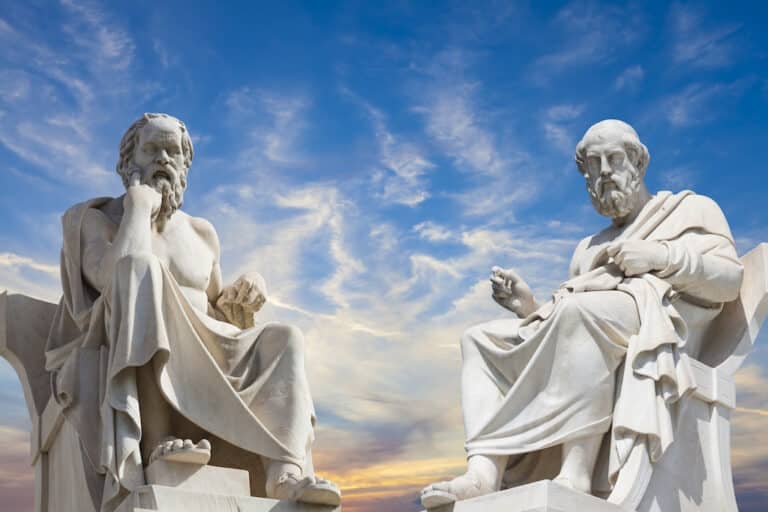
What Value Does a Philosophy Degree Have in the Real World?

Why Study Communication?

Seasonal Affective Disorder and How to Overcome Its Symptoms

Additional Arts and Humanities Resources
Frequently Asked Questions
According to the U.S. Bureau of Labor Statistics, the top professions of those holding a degree within the arts and humanities include art and design, communication and public relations, education and management.
Bureau of Labor Statistics, U.S. Department of Labor, Occupational Outlook Handbook, [Field of Degree: Liberal Arts, accessed January 2023] https://www.bls.gov/ooh/field-of-degree/liberal-arts/liberal-arts-field-of-degree.htm
BLS salary data represents national, averaged earnings for the occupations listed and includes workers at all levels of education and experience. This data does not represent starting salaries. Employment conditions in your area may vary.